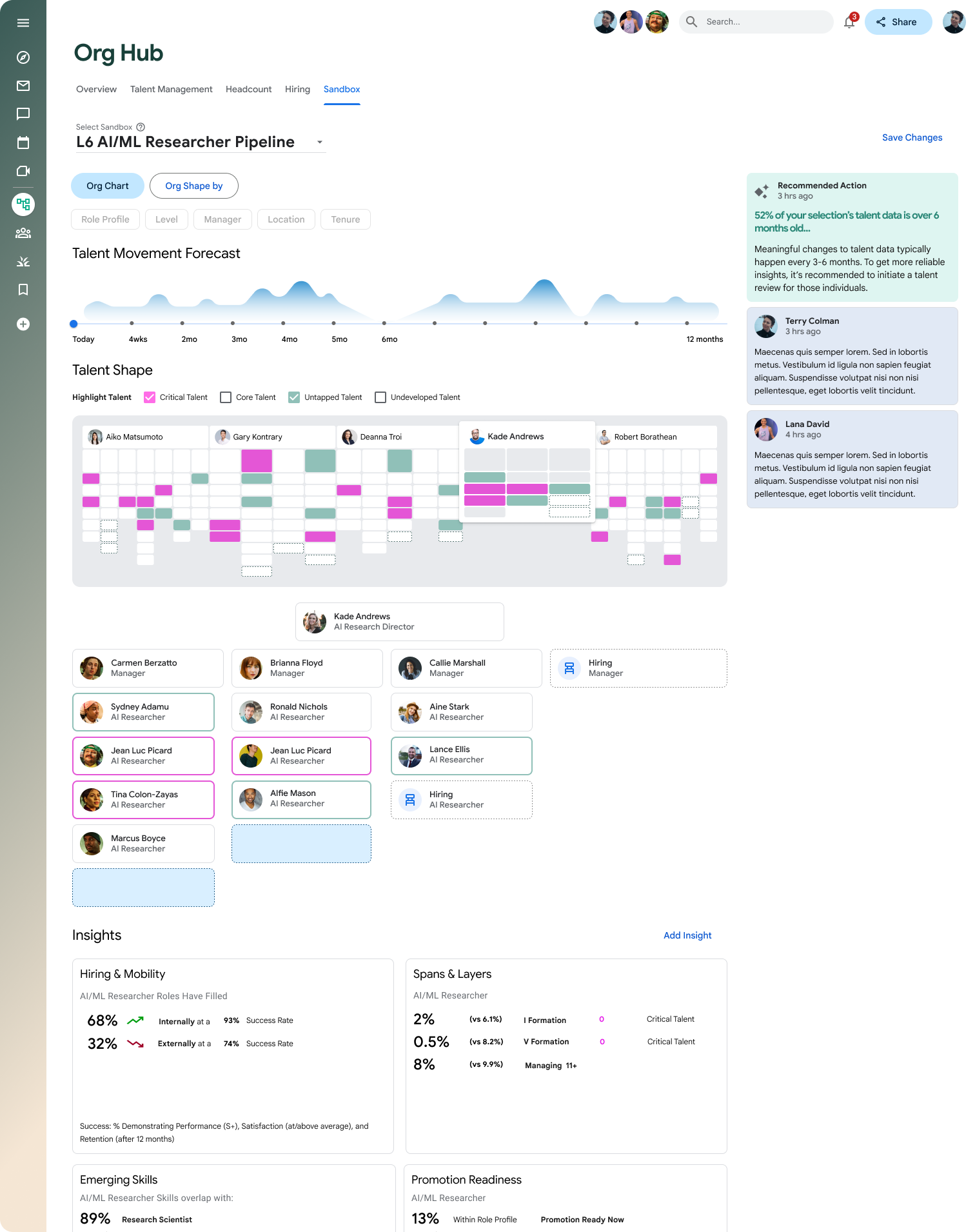
Aligning multi-org HR strategy through design.
Driving strategic design alignment across fragmented orgs and HR leadership stakeholders.
Partnered with Google leadership to address talent ecosystem strategy, scaling learnings from Meta to tackle multi-year organizational fragmentation.
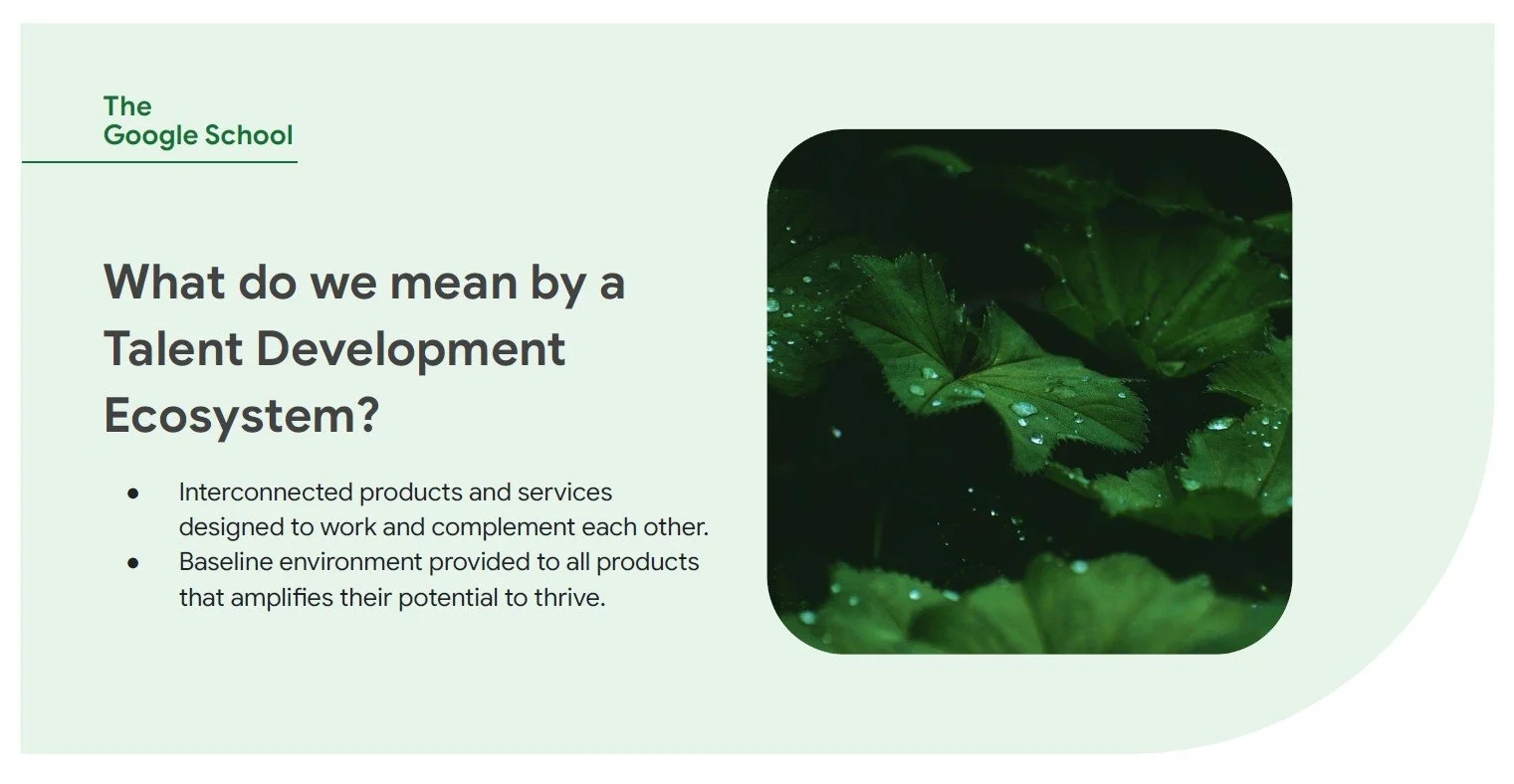
The Challenge: Envision a holistic, 5-year talent ecosystem that empowers Googler career growth while providing business clarity on workforce optimization.
The Real Challenge
Through conversations with team leads and HR leadership, the design concept became a tertiary goal. The real problems were organizational:
Fragmented product ecosystem
e.g., 4 separate learning platforms
Unclear ownership
Leading to minimal strategic collaboration
No horizontal awareness
Siloed teams without cross-cutting visibility
Near-sighted goals
No affordance for system-level efficiencies
The right solution wasn't a design, it was converging many people who each care about different pieces of the puzzle, and creating a shared reality to ground future conversations and efforts.

Strategy: Designing the First Wrong Answer
In spaces that are both very big and very blurry, conversation and documents can make things harder to clarify. Instead of a "northstar" to anchor on, I positioned the concept as "the first wrong answer", a provocation everyone could reference as we figured out what's actually right.
Map the stakeholder landscape
Identify every team with skin in the game, capture their aspirations and constraints.
Find the path, not the map
Focus on key moments that demonstrate unlocking the hardest problems, rather than designing the entire ecosystem.
Break the design
Avoid golden-path scenarios, attack the hardest problems head-on.
Balance tangibility with ambiguity
Leave room for each vertical partner to complete the sentence in resulting conversations.