Straightforward team management
Simpler direct report support while making them feel more supported and happier? Yes please.
Overview
Team Studio is a team management experience I designed and (vibe)coded to make performance and capacity more transparent and quantifiable, for both individual contributors and managers.
The Problem
Teams and managers across Atlassian lacked a unified view of how work was distributed, who was stretched thin, and how team dynamics translated into performance outcomes. Managers relied on fragmented signals; ICs had little visibility into how their contributions mapped to team goals , and how they were progressing in their performance journey.
I purposefully wanted to avoid a bloated "enterprise" experience like Jira that did everything under the sun, so set out with a handful of very clear areas to support:
1. What are we working on?
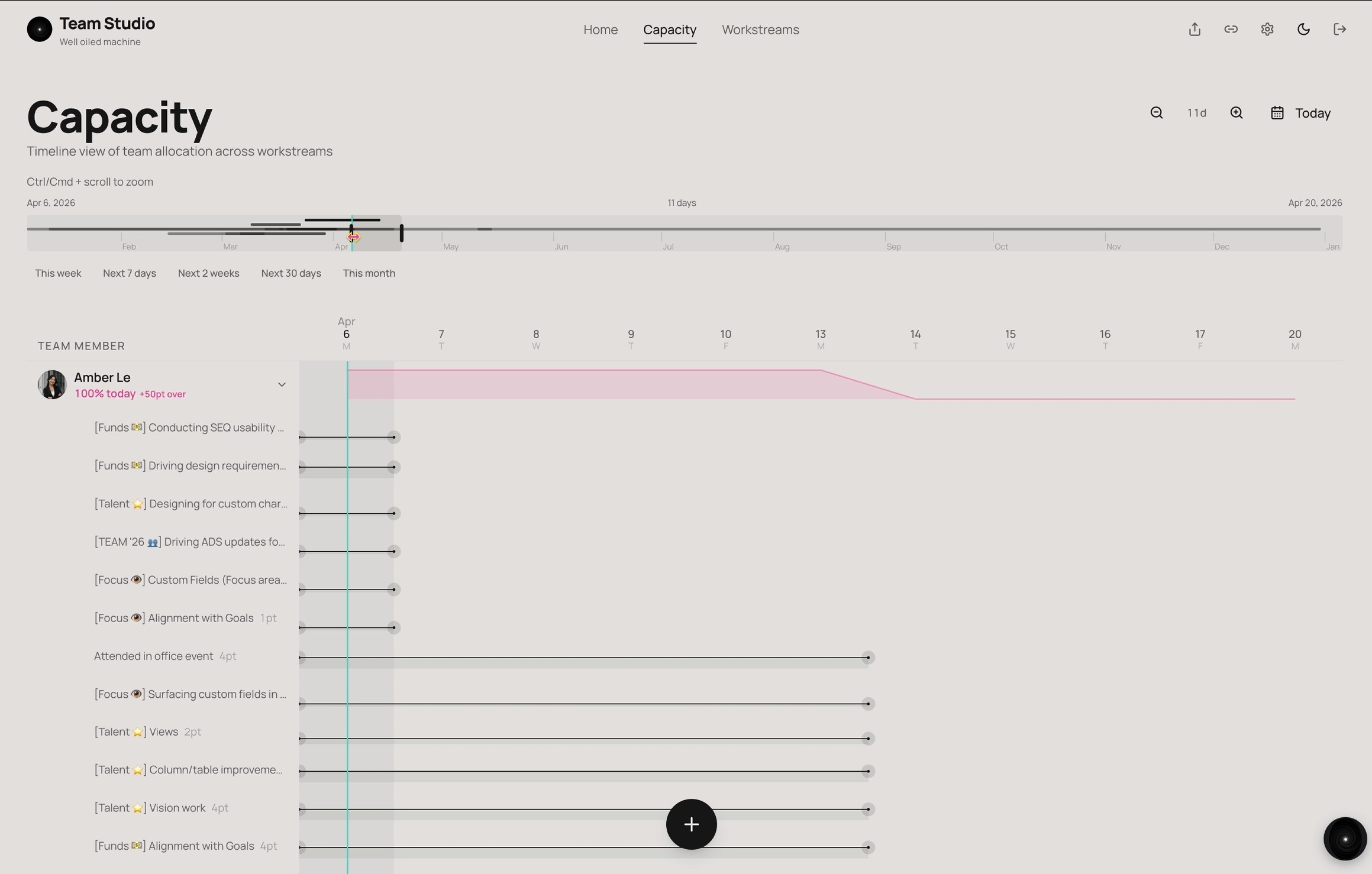
Help me understand what the team is working on, when it will be worked on til, and how large the effort was.
2. Does it matter?
Help me and my team members understand if the work we're doing is important to our business priorities and goals.
3. Where am I going?
Help me and my team members understand if the work someone is doing is appropriate for the performance of a persons level, or in the event of a career goal, appropriate for the next level.
Team Studio - light setup
Using Replit, I concepted and built a manager-focused surface with three clear goals in mind. Being that this was a beta, the ideal state of integrations wasn't yet available, so there's some light setup involved.
While I didn't have access to some API's to import data, I integrated Rovo (our AI agent at Atlassian) to fetch unstructured documents that were available in our knowledgebase, and to parse the content from performance expectations documentation into normalized structured rubrics that Team Studio could use.

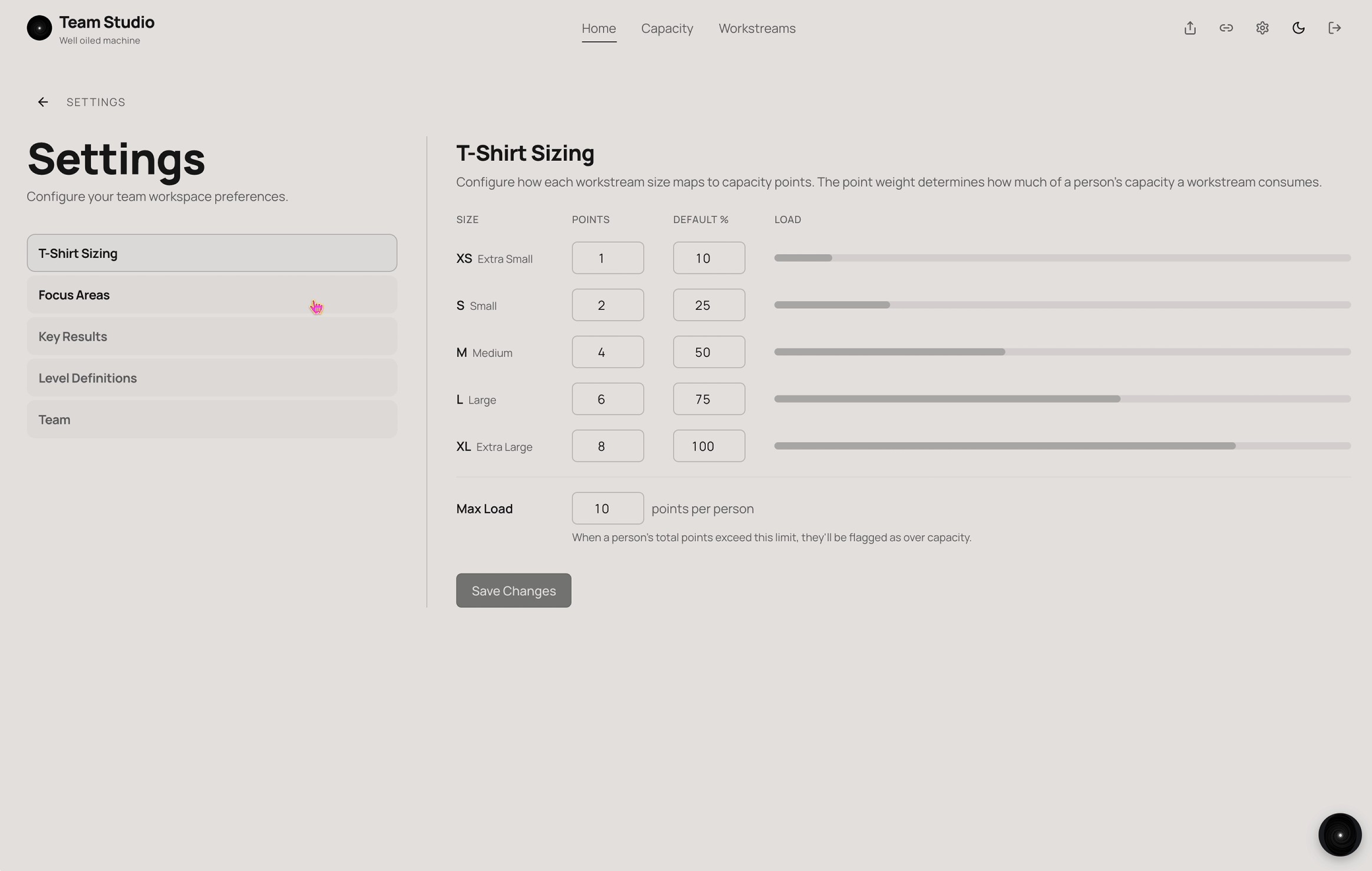
The only other area a manager would need to customize is their own mental model of T-shirt sizing to help weight their teams capacity understanding.

"What are you working on?"
A daily question any team member has of their other team members or reports. For teams that always need to stretch to cover multiple business areas, understanding and managing capacity is critical.
Team Studio's main form of "currency" is a workstream. Workstreams power the entire experience. For capacity, a workstreams start and end dates and t-shirt size give managers a glanceable understanding of both individual and team capacity.

"How am I doing?"
One of the most basic, but difficult to answer questions from an IC to their manager. Difficult not because you can't answer, but because the answers given are extremely qualitative and difficult to plan against.
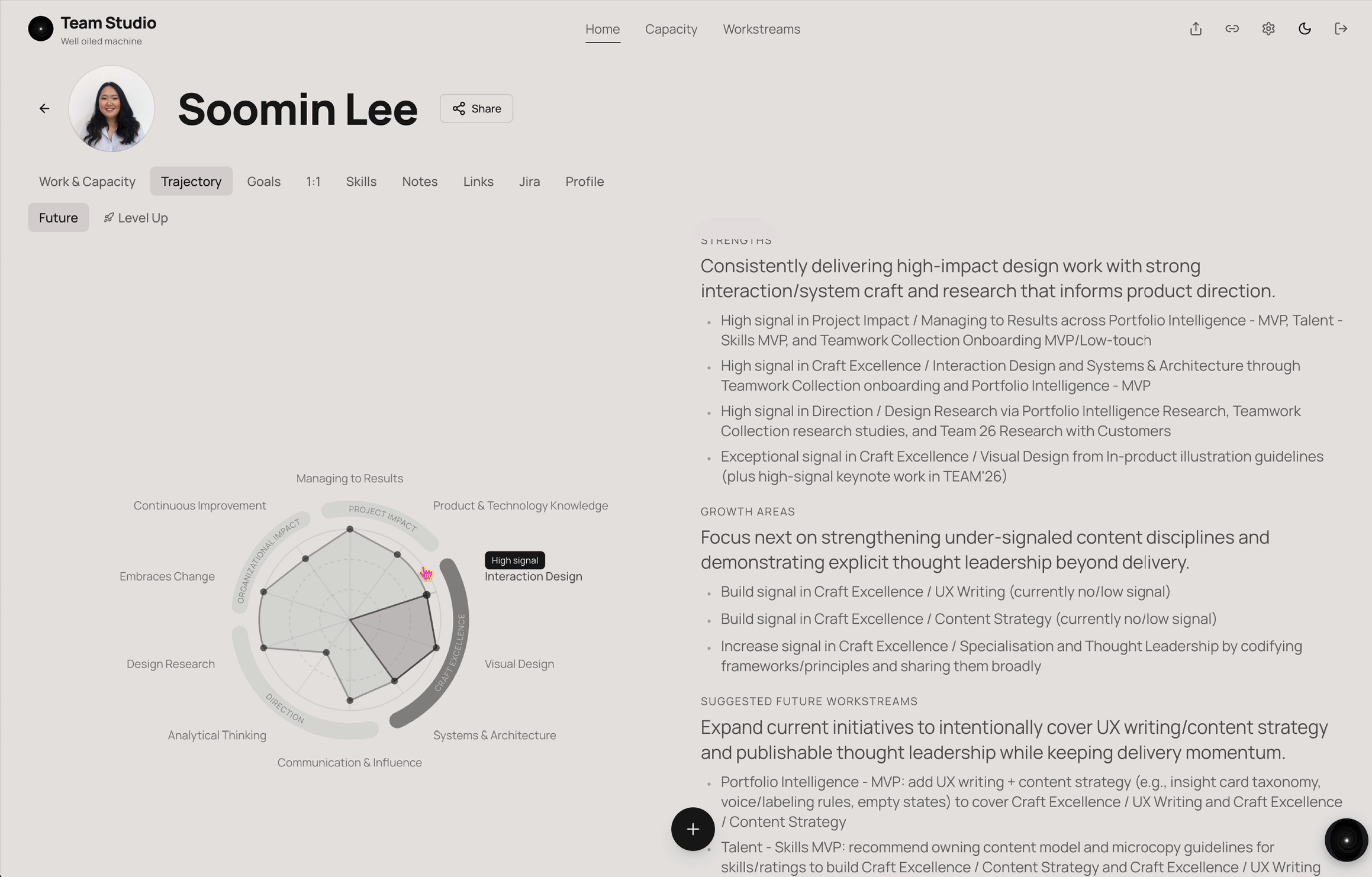
Using the level rubrics parsed by AI, Team Studio provides an interactive rubric map that allows managers and IC's to collaborate to map their workstreams to various areas of impact and performance expectations.

This gives people a visual, and succinct way, to see strength and growth areas. The rubric map in turn, powers a glanceable radar chart as well as an AI summary that summarizes what's going well, and identifies opportunities to address growth areas.

"Can I get a promo?"
Maybe one of the other most asked questions from reports to their manager. While typically you can never guarantee a yes, the next best thing the manager/IC collaboration can do is to know the expectations, quantify the opportunities and then plan against them.

Team Studio offers a "level up" feature (very on-the-nose, but something everyone inherently "gets"). With level up, Team Studio exposes the rubric and expectations of the persons next level. Then the manager and IC can run all the same excercises they were previously doing, but with the next level of expectations.
This keeps conversations and expectations clear between manager and report, making sure there are no surprises when performance reviews hit.
The Beta
Team Studio launched to my org a month ago, and found instant engagement especially among IC's. The experience of so plainly and succinctly capturing work, expectations, and the connection between the two resonated.
1:1's are considerably shorter when it comes to performance conversations, and questions regarding progress and planning for performance have reduced to practically zero. All the collaboration and referencing happens in product.
This experience is also part of our soon to be released "Strategy Collection" suite of apps for enterprise, which I also currently support.